
Overseas fundraising by Indian firms is experiencing a robust revival in 2024, following a lacklustre 2023. This resurgence is primarily driven by strong demand for high-yield bonds from international investors amid improving liquidity conditions and reduced hedging costs. Indian companies raised ~32,619 crore through overseas bonds in the first half of 2024, surpassing the total amount raised via such instruments in the entire 2023, which stood at ~31,218 crore, according to PRIME Database. In comparison, ~45,237 crore was raised in 2022 and ~1.05 trillion was secured in 2021.

Public-sector banks, including Canara Bank and Bank of India, are tapping the infrastructure bond market. Canara Bank on Tuesday raised Rs 10,000 crore at a coupon rate of 7.40 per cent through 10-year infrastructure bonds. This comes after SBI on July 10 raised Rs 10,000 crore also through infrastructure bonds with a 15-year tenor at a coupon rate of 7.36 per cent.

Major credit issuers, including the largest - HDFC Bank - have integrated their systems with the Bharat Bill Payment Systems (BBPS) for receiving credit card repayments via third-party applications.
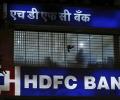
As many as 140 million customers of HDFC Bank and Axis Bank are expected to face interruption in banking services in the weekend due to the former's system upgrade and the transition of Citi India business to the latter. Both the banks have notified their customers about the interruption in services. HDFC Bank - the country's largest private sector lender with 93.2 million customers - had announced that it will undertake a system upgrade on July 13, wherein it will migrate its core banking system (CBS) to a new engineered platform to enhance customer experience.

Despite steady loan growth, the banking sector is expected to report subdued margins in the quarter ending June 2024 (Q1FY25), driven by high demand for deposits amidst tight liquidity conditions. However, according to Bloomberg analysts, listed banks are forecasted to see a 14.5 per cent year-on-year (Y-o-Y) increase in net profit. Estimates showed that banks' net interest income (NII), and revenues from interest minus interest expenses might grow 11.9 per cent Y-o-Y.

Outward remittances in February under the Reserve Bank of India's (RBI's) liberalised remittance scheme (LRS) fell 23 per cent over January, latest data released by the central bank, in its monthly bulletin, revealed. In February, Indians remitted $2.1 billion under the RBI's liberalised scheme. On a year-on-year (YoY) basis - aided by international travel - LRS jumped 15.24 per cent. Further, in April 2022-February 2023, outward remittances under LRS stood at $24.18 billion, an all-time high.

Contrary to expectations, the new business premium (NBP) of life insurance companies dropped 12.62 per cent year-on-year (YoY) in March 2023 due to an over 30 per cent drop in Life Insurance Corporation (LIC) of India's premiums, albeit on a high base. Data released by the Life Insurance Council shows the industry racked up NBP of Rs 52,081 crore in March 2023, compared with Rs 59,608.83 crore in the year-ago period. NBP is the premium acquired from new policies in a year. It is the sum of the first-year premium and single premium, reflecting the total premium received from new businesses.

The four public sector general insurance companies -- New India Assurance, United India Insurance, Oriental Insurance, and National Insurance Company -- have lost 800 basis points (bps) in market share in last five years to their private counterparts, the data from the Insurance Regulatory and Development Authority (Irdai) revealed. In 2018-19, the four had a cumulative market share of 40.04 per cent, with New India Assurance having a market share of 14 per cent and United India Insurance with a market share of 9.63 per cent. But, gradually in the past five years, these state-backed firms have lost their market share to private sector players, due to the declining health of their business.

The Supreme Court's decision to allow borrowers a chance to be heard before their accounts are flagged as fraudulent by lenders is expected to result in several cases being reopened where the borrower is aggrieved because of such classification, bankers said. Still, the reopening of cases would not be automatic. A borrower who is aggrieved by the 'fraud' classification will have to approach the bank and consequently, the bank will take the necessary steps so that the apex court's order is followed in letter and spirit, they said.

By the end of March 2022, only 2,140 million pieces of Rs 2,000 denomination currency notes were in circulation, or 13.8 per cent of the total value of notes.

The Reserve Bank of India is likely to take a call on the relaxations sought by HDFC Bank in relation to the merger, as the date of merger draws closer, sources said. The HDFC twins, which announced their decision to merge in April last year, received National Company Law Tribunal's (NCLT's) approval recently - a key milestone to close the deal in due time. The management of both the entities had said that it will take 15-18 months for the merger.
Life insurance companies reported a 17 per cent year-on-year (YoY) drop in new business premium (NBP) in February as state-owned Life Insurance Corporation of India's premiums contracted 32 per cent during this period on account of a drop in its group single premium segment. According to data released by the Life Insurance Council, the industry earned an NBP of Rs 22,847.65 crore in February - a drop of 17 per cent from the same period a year ago.

200 staffers, consisting of RBI officials and support teams, who are essential to perform critical functions, were isolated at a separate facility in a dedicated quarantined environment near all three RBI data centres.
Many life insurance companies are yet to see a sharp spike in the sale of high-value policies as was widely expected in the aftermath of the government's decision to tax income from insurance policies having an aggregate premium above Rs 5 lakh in a year.

After a sequential fall in November, due to high base and waning of the festival season effect, credit card spends have picked up again in December, recording over Rs 1 trillion for the 10th consecutive month. Latest figures released by the Reserve Bank of India (RBI) show that credit card spends in December 2022 touched Rs 1.26 trillion, up 10.21 per cent compared to November. And, on a year-on-year (YoY) basis, spends were up 34.31 per cent during this period.
Indians remitted close to $2 billion in November under the Reserve Bank of India's (RBI's) liberalised remittance scheme (LRS), latest data released by the central bank showed. Outward remittances under the scheme jumped 29 per cent to $1.99 billion compared to $1.54 billion in the year-ago month. Sequentially, outward remittances under the scheme were up about 3.5 per cent.
Ahead of the Union Budget 2023, insurers are hoping that the Centre will act on their recommendations, which includes increasing the limit for tax deduction under 80D of the Income Tax Act. Also among them are issuance of long-term bonds, tax incentives for home insurance premiums, and a separate section to claim deduction for term-insurance premium, among others. These suggestions would help improve the penetration of insurance in the country.

Public-sector banks, which are the largest employers in the banking space, have seen a drop in clerical staff over the years.

'It is observed that some of our branches are already losing good balances in their savings deposits as well as fixed deposits, which are maturing, to the other banks.'

The Life Insurance Corporation of India has the wherewithal to acquire a composite license, a top source aware of the development told Business Standard, adding that the insurance behemoth may look into entering the health and general insurance segments. "LIC has the scale, capacity, IT infrastructure, and the distribution reach to take advantage of the composite license. "LIC is looking at organic as well as inorganic growth opportunities.
